PlantBot: Water Reminder
Compact IoT device that monitors soil moisture and sends real-time alerts, designed for smart, low-maintance plant care.
Engineering Summary
This project represents my engineering philosophy as a compromise between technicism, usability, and pragmatism. My values include creating trustworthy minimum viable systems with available parts, testing performance with calibration and testing, and emphasizing clarity to users over unneeded complexity. Instead of overengineering a bespoke application or case, I used existing platforms and modular design to provide a working, scalable solution. In team environments, I can play a role by speeding up the prototyping of ideas, effectively communicating tradeoffs, and ensuring that technical decisions are aligned with user requirements and sustainability objectives.
Project Overview
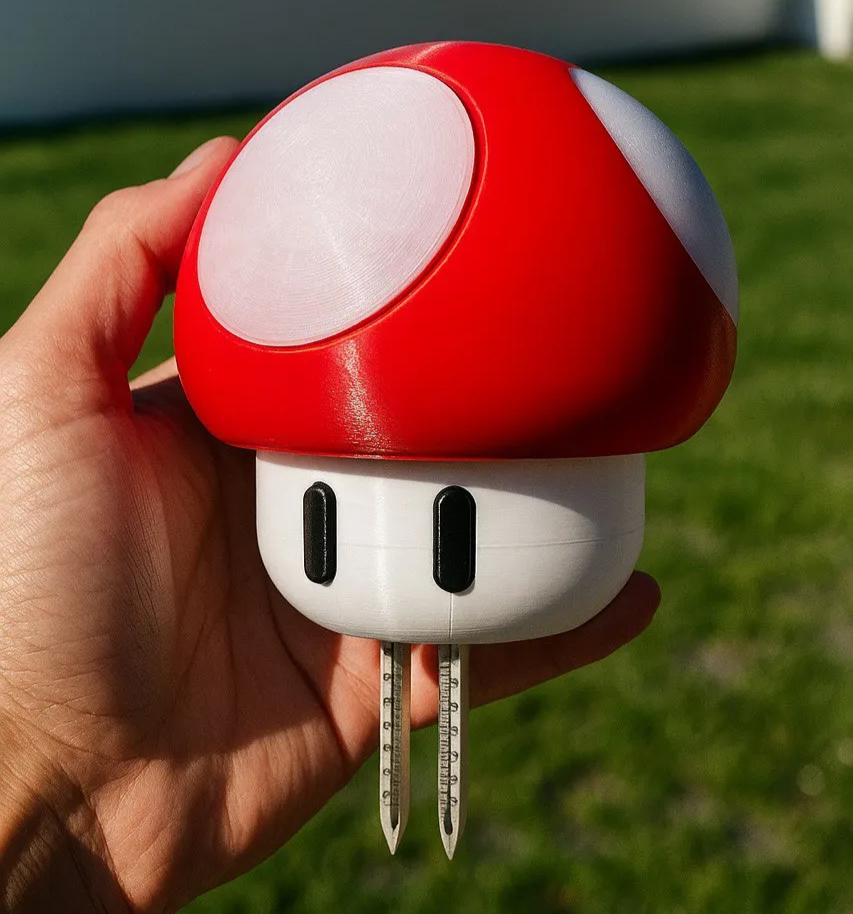
The Smart Plant Water Reminder is a Wi-Fi connected IoT device designed to monitor soil moisture and remind users when it’s time to water their plants. Built with an ESP8266 NodeMCU, a soil moisture sensor, and Telegram app integration, the device provides both visual LED alerts and instant smartphone notifications. Housed in a custom 3D-printed mushroom-style enclosure, this project combines engineering, sustainability, and thoughtful design to create a low-cost, reliable solution.
Objectives
Develop a sustainable, low-maintenance IoT device using accessible components.
Provide real-time soil moisture monitoring with reliable alerts.
Design a user-friendly enclosure that is visually appealing and functional.
Emphasis on reliability, accessibility, and low-cost scalability over feature density.
Features
Soil Monitoring: LM393 analog soil moisture sensor calibrated for accurate readings.
Visual Alerts: LED indicator lights up when soil is dry.
Smart Notifications: Telegram bot integration used to avoid custom app overhead while maintaining reliable real-time alerts.
Custom Enclosure: Modified 3D-printed mushroom case with sensor access and breadboard mount.
Future Iterations: Planned battery slot + extra LED for standalone use.
Tools & Technologies
Hardware: ESP8266 NodeMCU, LM393 Soil Moisture Sensor, LED, resistors, jumper wires, breadboard
Software: Arduino IDE, Telegram Bot API
Fabrication: 3D Printing (modified template model)

Results
Functionality: Device consistently alerted users when soil dried beyond threshold.
Reliability: Ran for extended periods without maintenance or misreading.
Impact: Provided a practical, meaningful solution for plant care, combining sustainability with usability.
Engineering Outcome: Strengthened skills in rapid IoT prototyping, sensor calibration under real-world noise, and integrating hardware constraints with user-facing software systems.

Skills Demonstrated
Ability to design and deploy a complete IoT system (ESP8266, Wi-Fi, API integration) from concept to working prototype
Circuit Prototyping & Sensor Calibration
Embedded Systems Programming (Arduino)
Cloud Messaging via Telegram Bot API
CAD & 3D Printing for Hardware Enclosures
Human-Centered, Sustainable Design Thinking
Project Gallery


